+86 18560646018

Views: 298 Author: Focus Color Publish Time: 2026-11-12 Origin: Site


Content Menu
● Why Temperature Monitoring Matters for Home Kombucha
● How LCD Thermometer Strips and Dial Thermometers Work
>> LCD Thermometer Strips: Color-Changing Surface Indicators
>> Dial Thermometers: Mechanical Temperature Measurement
● LCD Thermometer Strip vs. Dial Thermometers: Comparison Table
● Accuracy: What Are You Actually Measuring?
>> Surface Temperature Is Not Necessarily Brew Temperature
>> A Dial Thermometer Is Not Automatically More Accurate
>> Separate Resolution, Accuracy, and Response Time
● Which Thermometer Fits Your Fermentation Vessel?
>> Standard Glass Kombucha Jars
>> Ceramic, Plastic, and Insulated Vessels
● Practical Setup: Installing a Kombucha Thermometer Strip
● An At-Home Verification Method Before Your First Batch
>> Step 1: Reproduce Your Brewing Conditions
>> Step 2: Compare at a Relevant Temperature
>> Step 3: Check More Than One Condition
>> Step 4: Identify the Cause of Disagreement
● Heating Mats and Wraps: Avoid Measuring the Heater
● Hygiene, Maintenance, and Total Ownership Cost
● OEM/ODM Insights for Kombucha Kit Brands
● Final Recommendation and Next Step
>> Is an LCD thermometer strip accurate enough for kombucha?
>> Where should I place a thermometer strip on a kombucha jar?
>> Can I put a stick-on thermometer inside kombucha?
>> Does a dial thermometer need calibration?
>> Why does my strip disagree with my dial thermometer?
>> Can either thermometer confirm that kombucha is safe?
Choosing an LCD thermometer strip vs. dial thermometers for home kombucha fermentation vessels comes down to one practical question: do you need convenient surface monitoring or direct measurement inside the brew? An adhesive liquid crystal strip makes daily checks simple without opening the vessel. A properly installed immersion dial thermometer measures temperature within the liquid, but requires suitable placement and additional cleaning.
For most unmodified glass jars, an LCD thermometer strip is the practical starting point. For purpose-built fermenters with compatible fittings, an immersion dial thermometer can provide more representative liquid-temperature readings.
At Qingdao Focus On Color Industry & Trade Co., Ltd., we approach this comparison from a temperature-indicator manufacturing perspective. With more than 13 years of production experience and OEM/ODM capabilities, our priority is matching the indicator to the vessel, operating environment, and user—not claiming that one technology wins everywhere.

Kombucha fermentation depends on a mixed culture of yeasts and bacteria. Temperature affects their activity, influencing fermentation speed and the development of acidity and flavor.
However, there is no single temperature recommendation that overrides every culture supplier's instructions. The British Columbia Centre for Disease Control's fermented-food guidance identifies 20–22°C as optimal and gives an upper limit of 26°C. Follow a reliable recipe and the instructions supplied with your particular culture.
Consistency matters more than repeatedly chasing small display changes. A useful thermometer helps identify:
- A brewing location that becomes cold overnight.
- Temperature increases near windows or appliances.
- Uneven heating from a fermentation wrap.
- Differences between room temperature and the vessel.
Temperature monitoring does not establish that kombucha is safe. Acidity monitoring, clean equipment, appropriate ingredients, and correct fermentation procedures remain essential. The same guidance recommends a finished pH between 2.5 and 4.2; a thermometer cannot measure this.
In this application, "LCD thermometer strip" usually means a thermochromic liquid crystal temperature strip—not an electronic screen.
Temperature-sensitive liquid crystals change their reflected color as the strip warms or cools. Printed numbers let users associate the visible color with a temperature.
An adhesive strip attaches to the outside of a fermentation vessel. It therefore indicates the temperature of the surface beneath it, rather than directly measuring the kombucha.
Many designs use green to identify the current temperature, with adjacent colors indicating transitions. However, users should follow the specific product's reading instructions rather than assume every strip follows the same convention.
Most brewing dial thermometers use a bimetal sensing element. Two bonded metals expand differently as temperature changes, moving a pointer across a numbered scale.
An immersion model places its sensing section in the liquid, either directly or inside a suitable thermowell. Correct immersion depth is critical: inserting only the probe tip may not immerse the complete active sensing length.
"Dial thermometer" also includes surface-mounted instruments. Those measure surface temperature and should not be confused with immersion models. This article primarily compares adhesive liquid crystal strips with immersion bimetal dial thermometers.
| Comparison factor | LCD thermometer strip | Immersion dial thermometer |
|---|---|---|
| Measurement location | Outside vessel surface | Liquid surrounding the active sensing section |
| Installation | Adhesive attachment | Clip, compatible port, or thermowell |
| Vessel modification | Normally unnecessary | May require a purpose-built fitting |
| Battery requirement | None | None for mechanical models |
| Routine reading | External color check | External pointer check when permanently installed |
| Liquid contact | None when externally mounted | Probe or thermowell contacts the brew |
| Cleaning burden | Protect and clean the exterior as specified | Clean and sanitize wetted components |
| Main reading limitation | Surface temperature may differ from liquid | Incorrect immersion or placement creates error |
| Adjustment | Usually not user-adjustable | Some models provide adjustment |
| Best practical fit | Unmodified jars and starter kits | Compatible fermenters and direct measurements |
Neither format automatically provides better accuracy. Product specifications and installation determine whether the reading is useful.
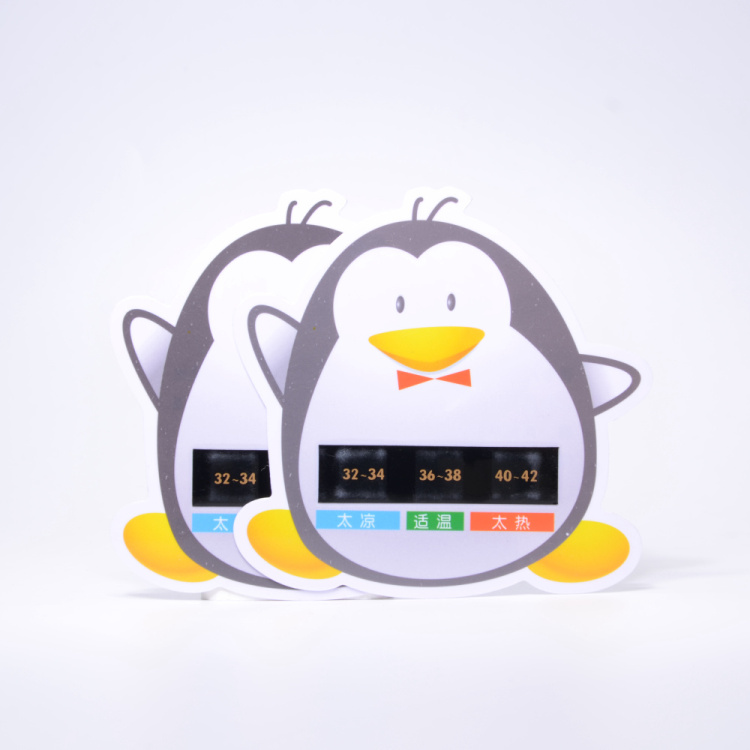
A strip may indicate the vessel wall accurately while the kombucha inside is at a different temperature.
The relationship changes with wall material, thickness, airflow, heating location, and whether temperatures are stable or changing. An insulated vessel presents a particularly important limitation: its outer wall may be thermally separated from the contents.
For an ordinary single-wall glass jar in a stable room, an exterior strip can provide useful trend monitoring. Nevertheless, do not assume a universal correction such as "always add two degrees." Check the actual setup.
A dial gives direct liquid-temperature information only when correctly selected and installed.
Potential errors include:
- Insufficient immersion of the active sensing section.
- Contact between the probe and vessel wall.
- Placement near a localized heater.
- Reading the pointer from an angle.
- Calibration drift or mechanical damage.
Accuracy specifications also require careful interpretation. An instrument rated as a percentage of its scale is not necessarily accurate to that same percentage of the displayed reading.
For kombucha, prioritize documented performance near your fermentation temperature, readable graduations, and suitable immersion requirements over an unnecessarily broad scale.
These terms describe different properties:
- Resolution is the smallest displayed increment.
- Accuracy describes agreement with the stated reference under specified conditions.
- Response time describes how quickly the indication follows temperature changes.
A strip with closely spaced numbers is not automatically more accurate. Likewise, a moving dial pointer does not prove that the sensing element has reached equilibrium.
For an unmodified glass jar, a stick-on thermometer offers straightforward installation and continuous visibility.
Position it on the sidewall below the normal liquid level. Avoid the shoulder, base, and areas that do not provide full adhesive contact.
A permanent immersion dial usually adds unnecessary complexity unless the vessel already has a suitable fitting. Do not attempt to drill an ordinary glass jar to install one.
A purpose-built stainless steel fermenter with a compatible sanitary port can support an immersion dial thermometer or thermowell.
Check that the active sensing section remains submerged at the lowest intended batch volume. A fitting that works for a full vessel may leave the probe above the liquid in a smaller batch.
An exterior strip remains an option on single-wall stainless steel, but it still measures the outside surface.
Evaluate these individually.
Textured ceramic surfaces can prevent reliable adhesion. Plastic compatibility depends on the material and adhesive. Thick walls may increase the delay between liquid-temperature changes and the outside reading.
For double-wall or insulated vessels, do not treat an external strip as a substitute for measuring the contents. A compatible immersion instrument is generally the more appropriate choice.
Use this sequence before starting a batch:
1. Choose a smooth exterior area below the expected liquid level.
2. Clean the surface using a method compatible with the vessel and adhesive.
3. Allow it to dry completely.
4. Apply the strip flat, without trapped air or lifted edges.
5. Keep it away from direct sunlight and direct heater contact.
6. Allow the vessel and indicator to stabilize before interpreting the reading.
7. Check the strip's instructions for its color sequence and operating range.
Do not immerse an exterior adhesive strip unless the manufacturer explicitly approves that use.
During cleaning, protect it from soaking, abrasion, and temperatures outside its rating. "Water-resistant" should not be interpreted as dishwasher-safe or suitable for prolonged immersion.
One useful improvement is checking the assembled setup rather than relying solely on a thermometer's specification.
This is a practical comparison, not a certified calibration procedure.
Fill the vessel with water to the normal batch level. Use the intended shelf, room, and heating arrangement.
Use a reference thermometer with documented accuracy near your intended fermentation temperature. Position its sensing section correctly, away from the wall, and allow readings to stabilize.
Record the reference reading alongside the strip or dial reading.
Repeat under cooler and warmer conditions within the expected operating range. If using a heater, compare both with and without heating.
A difference that changes when the heater operates may indicate placement effects rather than instrument failure.
Do not convert one comparison into a permanent offset. If disagreement is inconsistent or exceeds your needs, change the installation or measurement method.
A thermometer touching a heating wrap can show the temperature of the locally heated wall rather than a representative temperature of the brew.
For a strip, select an exposed monitoring position away from direct heater contact and verify its relationship to the liquid. For an immersion dial, avoid placing the sensing section immediately beside a heated wall.
Neither instrument in this comparison regulates temperature. A separate controller and appropriately positioned sensor are needed for automatic heating control.
Use heating equipment according to its instructions. Do not assume a reassuring display elsewhere on the vessel rules out a localized hot spot.
An externally mounted strip adds no wetted component to clean. This simplifies routine monitoring and avoids opening the vessel just to read temperature.
An immersion dial can also remain readable without opening the vessel when installed through a compatible sidewall fitting. However, its probe, thermowell, seals, and surrounding fittings require appropriate cleaning and sanitation.
For ownership cost, compare more than the initial instrument price:
- Installation accessories and compatible fittings.
- Cleaning and maintenance time.
- Replacement strips or damaged components.
- Verification and adjustment requirements.
- Suitability for different batch sizes.
A strip often simplifies a basic jar setup. A reusable dial may offer better value in a fermenter already designed for it. Neither is universally cheaper over its service life.
For kit suppliers, the best thermometer is also the one customers can install and interpret correctly.
At Qingdao Focus On Color Industry & Trade Co., Ltd., we recommend defining the application before finalizing an indicator design. A practical specification brief should include:
- Vessel material, curvature, and available label area.
- Required temperature range and displayed increments.
- Celsius, Fahrenheit, or dual-scale labeling.
- Accuracy requirements and verification conditions.
- Adhesion, splash exposure, and cleaning expectations.
- Clear reading instructions and branded packaging.
A highlighted operating band should reflect the kit's validated instructions—not imply that temperature alone guarantees a safe batch.
Ask for representative samples and evaluate them on the actual vessel before approving artwork or bulk production. This connects indicator performance with the customer's real brewing environment.
Choose a liquid crystal strip for convenient monitoring on an unmodified, single-wall home fermentation jar. Choose an immersion dial when your vessel supports hygienic installation and you need measurements within the liquid.
For branded kombucha kits or customized fermentation indicators, contact Qingdao Focus On Color with your vessel dimensions, material, temperature requirements, cleaning conditions, and artwork. Request OEM/ODM sample evaluation before committing to production.
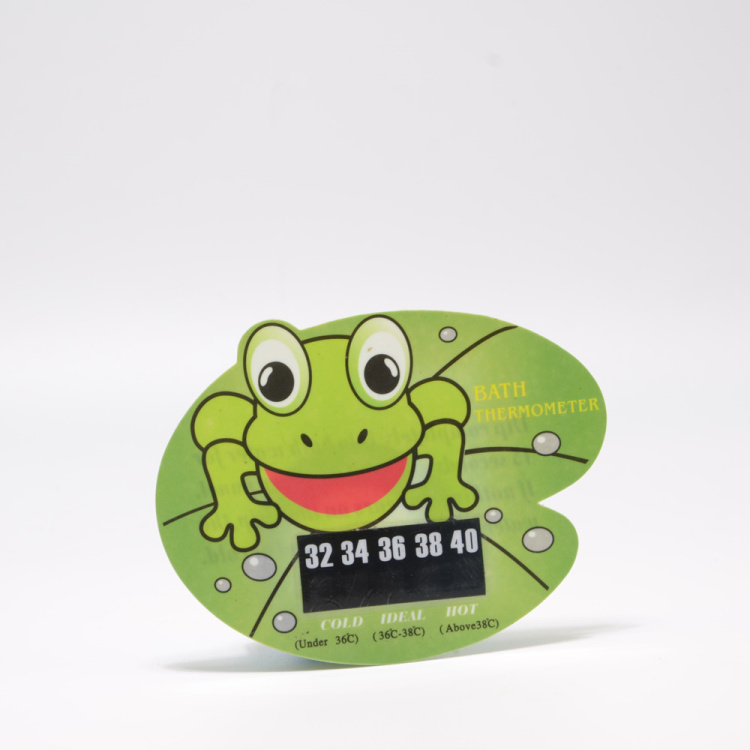
It can be useful for routine monitoring when its specified performance meets your needs. Verify the installed strip against a suitable reference because surface and liquid temperatures may differ.
Attach it to a clean, dry, smooth exterior area below the normal liquid level. Avoid direct sunlight, heater contact, and locations that prevent complete adhesion.
Not unless it is explicitly approved for immersion and the intended food-contact application. External adhesive strips should remain outside the vessel.
It needs periodic verification according to its instructions, especially after impact or suspicious readings. Some models allow adjustment; others require service or replacement.
They may measure different locations. Other causes include thermal lag, uneven heating, insufficient probe immersion, poor strip contact, or instrument error.
No. Temperature is only one process variable. Follow reliable preparation guidance and monitor acidity appropriately; neither a strip nor a dial measures pH.
1. British Columbia Centre for Disease Control — "Fermented Foods Guideline: Kombucha and Jun." Source for fermentation-temperature guidance, acidity limits, and process-safety context. [Read the guidance]. [bccdc]
2. SpotSee — "Liquid Crystal Thermometers." Source for reversible liquid crystal operation, color interpretation, and product-specific performance considerations. [Read the technical overview]. [spotsee]
3. WIKA — "How Does a Bimetal Thermometer Work?" Source for the operating principle of bimetal temperature measurement. [Read the explanation]. [wika]
4. WIKA — "Bimetal Thermometer for Sanitary Applications, Model 55." Source for complete immersion of the active sensing length and model-specific accuracy requirements. [Read the technical data sheet]. [wika]
5. MoreBeer — "Calibrating Bimetallic Thermometers." Source for comparison near operating temperature and model-dependent immersion requirements. [Read the calibration discussion]. [morebeer]


