+86 18560646018

Views: 299 Author: Focus Color Publish Time: 2026-11-17 Origin: Site


Content Menu
● How Water Sensitive Stickers Are Supposed to Work
● Why Water Contact Indicator Stickers Change Color Early
>> Condensation creates liquid water without a visible spill
>> Humidity exposure and label construction affect the result
>> Moisture can enter during packing, shipping, or application
>> A visual defect can look like water activation
● Quality Control Checklist for Premature Sticker Activation
● Separate Humidity, Condensation, and Direct Water in Testing
>> Define pass and fail before testing
● How to Prevent Early Color Change in OEM and ODM Orders
>> Specify what the sticker should detect and what it should tolerate
>> Validate the packaging and the receiving process together
>> Can water sensitive stickers change color from humidity alone?
>> Why did only the edge of my water contact sticker turn red?
>> Can a sticker change color inside a sealed pouch?
>> Will a water sensitive sticker return to its original color after drying?
>> Does a changed sticker prove that a device was flooded?
>> Should I reject an entire shipment if a few stickers arrive discolored?
Water sensitive stickers can change color before anyone sees them touch water because condensation, damp handling, or moisture trapped inside packaging may already have wet the label. But not every early color change proves water contact. Some labels respond to humidity by design, and a stain or printing defect can look like activation. For quality control teams, the first question is whether the sticker behaved as specified under the conditions it actually experienced.
The most useful evidence is often available before anyone runs a lab test: where the color first appeared, whether unopened packs show the same change, and when the affected stock moved between environments. Those clues help you decide whether to investigate the sticker, the packaging, or the handling process first.

A water contact indicator is designed to show that liquid reached the label. One common design changes from white to red; other products may use different colors or reveal a pattern. Some indicators retain the change after drying, but buyers should verify whether their specific design is permanent and what counts as a valid response.
A humidity indicator serves a different purpose. It responds to water vapor under specified conditions rather than waiting for liquid water to reach its surface. If your application is product returns or leak detection, ordering a "moisture-sensitive sticker" without defining the trigger can leave the supplier and buyer testing for two different things.
The distinction also matters when interpreting a changed label. A water contact indicator can tell you that moisture reached its location under conditions that triggered it. It cannot, by itself, tell you where the moisture came from, when it arrived, or whether it damaged the product. A sticker near an opening and one deep inside an enclosure may tell different stories about the same incident.
Condensation is the first possibility I would check when cold stock changes color after entering a warmer, humid room. The dew point is the temperature at which water vapor begins to condense. If the label, liner, or product housing is colder than the surrounding air's dew point, droplets can form on that surface even though the room looks dry.
Consider a carton unloaded from a cold truck and opened immediately in a humid receiving area. The labels inside may still be cold enough to collect moisture. By the time an inspector sees a pink edge, the droplets may have evaporated. In that case, the label may have detected real water contact, just not the kind anyone was looking for.
High relative humidity is not the same as direct liquid contact. If a liquid-contact indicator changes during a humid exposure, first check whether condensation occurred during chamber loading, temperature transitions, or removal. Only then assess whether the construction stayed stable within its agreed non-condensing limits.
Geometry matters, too. In one published condensing-steam test, a commercial indicator began turning red around the edges after roughly 45 seconds to one minute. The 4 mm die-cut pieces turned almost completely red after five minutes. Those observations apply to that tape and test setup, not to every indicator. They do illustrate why buyers should qualify the finished die-cut part instead of assuming it performs like a larger sample cut from the same material.
A pouch can arrive intact and still contain moisture if the labels, liner, or packing materials were damp when it was sealed. Conversely, a damaged seal, puncture, or repeated opening can expose part of a shipment while the rest remains unaffected. Compare the inner pouch with the outer carton; an undamaged carton does not establish that the inner barrier was intact.
At the assembly station, check damp gloves, recently cleaned fixtures, and housings that were wiped but not fully dried. If the labels look normal on the liner and change only after application, check the substrate and cleaning process before concluding that the sticker lot is defective.
An uneven tint, transferred printing, or surface stain can resemble a water response. Compare the affected label with two references: an unexposed sample and a sample intentionally activated using the agreed test method. Examine the color, pattern, and starting point under the same lighting. A mismatch is a reason to investigate further, not proof that water played no role.
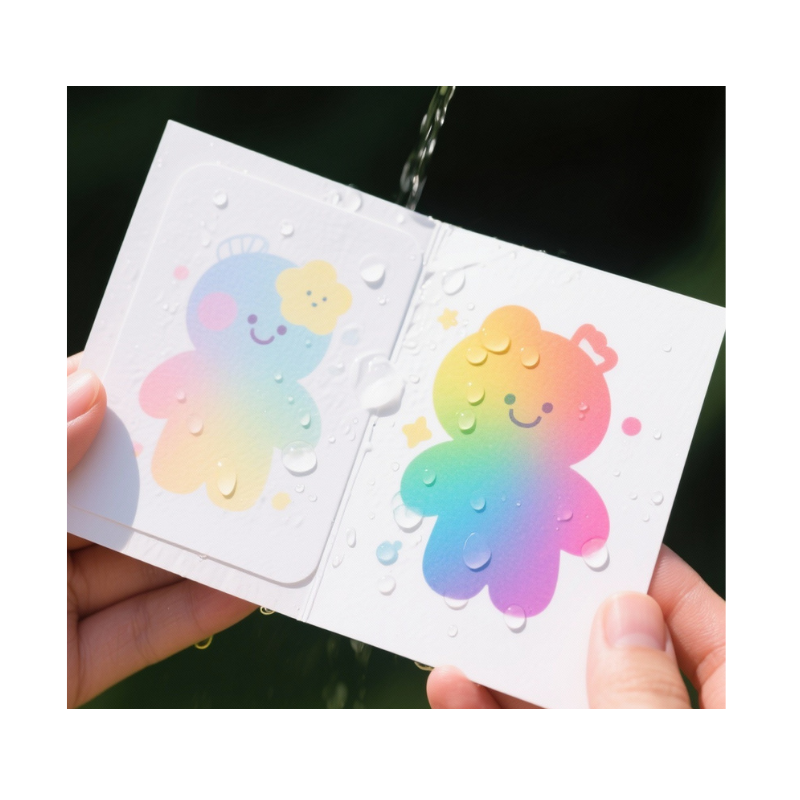
Start by isolating the affected stock and preserving its packaging. Do not let a suspect lot get mixed with a new delivery before you know how widespread the issue is. Photograph unopened packs, affected labels, and surrounding surfaces before handling changes the evidence.
| What you observe | What to check first | What would make the comparison useful |
|---|---|---|
| Color appears after a cold delivery is opened | Condensation during unpacking | Record room temperature, relative humidity, and the label or housing surface temperature at opening. |
| Only one pouch or carton is affected | Packaging damage or moisture present at sealing | Inspect seals and punctures, then compare unopened packs from the same lot and shipment. |
| The same edge changes on multiple pieces | Local wetting, cut-edge exposure, or a converting issue | Compare different positions on the roll or sheet and test the finished die-cut shape. |
| Labels change only after application | Residual cleaner, damp handling, or a cold substrate | Apply matched samples to the production surface and a verified dry reference surface. |
| The tint differs from the usual activated color | Printing, contamination, or a visual inspection error | Compare dry, suspect, and deliberately wetted samples under consistent lighting. |
Request a supplier retain sample from the same lot if one is available. A clean retain sample and discolored field stock point the investigation toward differences in shipping, storage, or handling, but they do not rule out variation within the lot. If the retain sample shows the same pattern, review the material and converting records before widening the investigation.
A useful qualification test does more than show that a sticker changes color when wet. It shows that the sticker stays unchanged when it should, responds when it should, and can be graded consistently by different inspectors. Use matched samples from the same lot and test parts in the final size, with the intended printing and application surface.
1. Dry control. Keep a set of samples unexposed under agreed conditions. Photograph them at the start and end so that changes in lighting or inspection setup do not become part of the result.
2. Non-condensing humidity exposure. Agree on temperature, relative humidity, and duration. Check that specimen surfaces stay above the dew point during loading, exposure, and removal. Afterward, wet a separate subset of the conditioned labels to confirm they still respond.
3. Condensation challenge. Reproduce a realistic transition, such as cold stock entering a warm receiving area. Record the surface temperature and room conditions, note when condensation appears, and document where the first color change occurs.
4. Direct-water positive control. Agree on the water type, amount, application point, contact time, and read time. Record both the time to first visible change and the time to the agreed pass condition. They are not necessarily the same.
Where shipping is the suspected cause, repeat the relevant exposure with the finished pouch or carton. Packaging conditioning can help you compare configurations under defined temperature and humidity profiles. It does not, on its own, certify the label's activation threshold or establish its shelf life.
Agree on the acceptable dry color, the minimum activated area or pattern, and whether any edge tint is allowed. For example, a specification might reject visible activation after an agreed non-condensing exposure and require the approved pattern to appear within the agreed read time after a controlled water dose. Compare both outcomes against approved reference images.
Also decide whether the activated state must remain readable after drying. That matters when a returned device might not reach an inspector until days or weeks after the incident. If the decision carries warranty or financial consequences, document how inspectors should grade a faint edge or partially activated label rather than leaving it to individual judgment.
Tell your supplier whether the sticker needs to respond to direct water, condensation, or both. If condensation must not trigger the label, describe the expected exposure and the liquid event it must still detect. Condensation is liquid water, so separating incidental droplets from a target event requires a defined and tested difference in exposure, not just a request for a "humidity-proof" sticker.
Provide the finished dimensions, substrate, placement, expected shipping conditions, storage duration, and inspection method. A useful specification covers three states: how the label looks on arrival, how it looks after the maximum agreed non-triggering exposure, and how it looks after a defined triggering event. That gives sourcing, production, and receiving teams the same basis for acceptance.
Keep labels sealed until use, and let cold packs warm while still closed before opening them in humid rooms. Store opened rolls according to the supplier's instructions, record opening dates where useful, and prevent partly used stock from losing its lot identification. If a moisture-barrier pouch or desiccant is proposed, validate it as part of the packed configuration rather than assuming it solves the problem.
Qingdao Focus On Color Industry & Trade Co., Ltd. has more than 13 years of production experience across color-changing and specialty products and offers OEM, ODM, and custom development. To discuss a water sensitive sticker specification, send us your target size, application surface, expected storage and transit conditions, and photos of any premature color change. If you already have a test method or an approved reference sample, include it so we can discuss the same acceptance criteria before sampling.
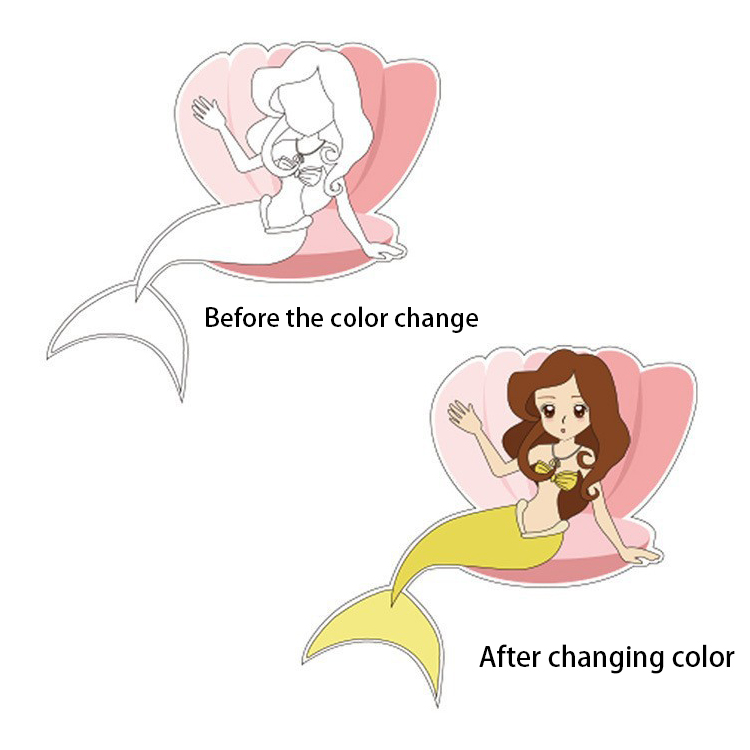
Humidity indicators are designed to respond to moisture in the air. For a liquid-contact sticker, check its specified non-condensing humidity limits and rule out condensation before attributing a color change to water vapor alone.
Moisture may have reached the perimeter first, or a stain or print issue may be mimicking activation. Compare the pattern with a deliberately wetted sample of the same shape. If the same edge is affected across multiple pieces, record where those pieces came from on the roll or sheet.
Yes. Moisture may have been present before sealing, or the pouch may have a seal defect or puncture. Preserve the suspect pouch and compare it with unopened packs from the same lot before deciding whether the issue is isolated.
That depends on the design. If the sticker will be used as a record of past exposure, specify a permanent or persistent response as appropriate and verify how long it remains readable under the expected inspection conditions.
No. A changed indicator does not establish how much water was present, how it entered, or whether it caused damage. Use the label's position, surrounding evidence, and product inspection findings together.
Put the affected stock on hold and apply the agreed sampling and acceptance plan. Track the affected units by pouch, carton, and lot. One compromised pouch and the same defect across several unopened cartons call for different investigations.
- [3M, *Water Contact Indicator Tape 5557: Condensing Steam Test*, technical bulletin, May 2003] — Source for the edge-response timing and the observation on 4 mm die-cut samples. [multimedia.3m]
- [Vaisala, *Dew Point Measurements*] — Source for the definition of dew point and the relationship between water vapor and condensation. [vaisala]
- [Grainger, *3M 5557 Series Water Contact Indicators*, product specifications] — Source for the commercial white-to-red indicator example. [grainger]
- [Keystone Compliance, *ASTM D4332 Package Testing*] — Overview of environmental conditioning for packages and packaging components. [keystonecompliance]


