+86 18560646018

Views: 294 Author: Focus Color Publish Time: 2026-11-07 Origin: Site


Content Menu
● Why Sunroom Window Film Replacement Requires More Than Appearance
>> UV Protection, Heat Control, and Glare Are Different Functions
>> Film Darkness Is Not a Reliable UV Performance Indicator
● UV Test Card vs. Visual Guesswork: Side-by-Side Comparison
● What a Photochromic UV Test Card Actually Measures
>> Wavelength Sensitivity Matters More Than Color Intensity Alone
>> A Qualitative Card Is Not a UV Transmission Certificate
● What Visual Inspection Can—and Cannot—Tell You
>> Do Not Confuse Installation Curing With Premature Failure
>> Furniture Fading Is a Warning, Not a Diagnosis
● How to Check Sunroom Window Film With a UV Test Card
>> 1. Identify the Installed Window System
>> 2. Confirm That the Card Suits the Application
>> 3. Verify That the Card Responds
>> 4. Compare Under Closely Matched Conditions
>> 5. Establish a Pane-Specific Baseline
>> 6. Repeat Before Drawing Conclusions
>> 7. Escalate Unresolved Changes
● A Better Replacement Decision Matrix
● An Illustrative Sunroom Assessment
● How Long Does Sunroom Window Film Last?
● Choosing OEM/ODM UV Test Cards for Window Film Programs
>> Specify the Demonstration Before the Artwork
>> Build Clear Limitations Into the Product
● Make Replacement Decisions With Evidence
>> 1. Can a UV test card tell me exactly when to replace window film?
>> 2. Does no color change prove that a window blocks all UV?
>> 3. Does a darker UV card mean the film is performing worse?
>> 4. Can I use a UV card to test heat rejection?
>> 5. Should visibly damaged film be replaced even if the card stays unchanged?
>> 6. Should every pane in a sunroom be replaced together?
A UV test card offers more useful evidence than visual guesswork when assessing UV transmission through sunroom windows. However, it cannot independently determine when window film needs replacement. The strongest approach combines screening, physical inspection, installation records, and professional measurement when necessary.
That distinction matters. Clear-looking film may provide no visible indication of its current UV performance. Conversely, a color-changing card does not automatically prove that the film has failed.
At Qingdao Focus On Color Industry & Trade Co., Ltd., our manufacturing background includes more than 13 years of experience producing photochromic, thermochromic, liquid crystal thermometer, and fragrance products. From this color-change manufacturing perspective, we believe a useful indicator must make its limitations as clear as its response.
This guide compares UV test cards with visual inspection and explains how to build a practical, evidence-led window film replacement process.
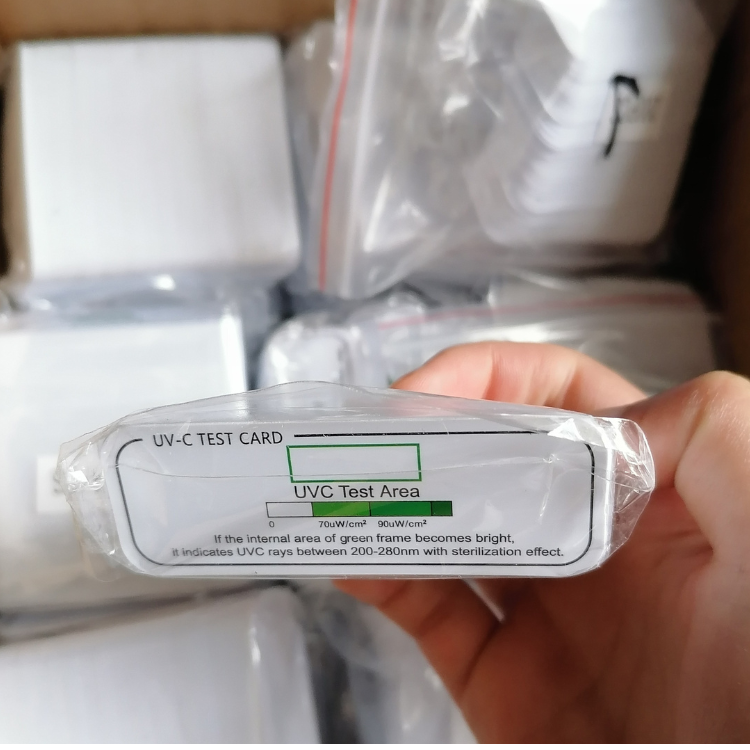
Sunrooms create a demanding assessment environment. Vertical windows, sloping roof glazing, different orientations, and partial shading can produce substantially different exposure conditions within one room.
A room that looks bright is not necessarily poorly protected against UV. Likewise, a room that feels cooler does not necessarily have better UV protection.
Window film can address several needs:
- Reducing ultraviolet transmission.
- Managing solar heat gain.
- Reducing visible glare.
- Improving privacy or appearance.
- Slowing sunlight-related deterioration of furnishings.
These functions require different assessments. A UV indicator does not measure solar heat rejection, insulation performance, or visible-light transmission.
The International Window Film Association distinguishes these properties in its technical guidance. Its guidance also explains that fading has multiple contributors, meaning even effective UV protection cannot eliminate every cause of fading.
Darkness mainly changes the appearance and transmission of visible light. It does not provide a dependable measure of UV rejection.
The Skin Cancer Foundation notes that clear UV-protective films can provide substantial UV protection. Its Seal of Recommendation requires qualifying window films to block at least 99% of UVA and UVB radiation. This is a documented product requirement—not something an observer can verify by judging tint darkness.
A UV test card and visual inspection answer different questions.
| Assessment factor | UV test card | Visual inspection |
|---|---|---|
| Main purpose | Screen for radiation that activates its pigment | Identify visible physical condition |
| Typical observation | Color change under specified exposure | Peeling, scratches, discoloration, or distortion |
| Principal advantage | Makes an otherwise invisible stimulus observable | Requires no indicator or measuring device |
| Principal limitation | Response depends on the card and test conditions | Cannot quantify invisible UV transmission |
| Best application | Comparative checks with a documented baseline | Routine condition checks |
| Quantifies UV rejection? | Not without suitable calibration and validation | No |
| Determines replacement alone? | No | No |
For sunroom maintenance, these methods complement each other. Choosing one and ignoring the other creates avoidable uncertainty.
A photochromic UV test card contains a material that changes color when exposed to activating wavelengths.
This makes it useful for demonstrations and preliminary comparisons. However, the observed color is a response of the indicator material—not a direct readout of the window film's remaining service life.
Different photochromic formulations can respond differently across the light spectrum.
A 2024 study of photochromic indicators found that the tested devices responded primarily to UVA, while some also responded to high-energy visible light. Several reached color saturation quickly, limiting their usefulness for distinguishing radiation intensity. These findings apply to the tested materials and should not be treated as specifications for every commercial card.
The practical implication is straightforward: a card should have documented spectral-response information before it is used to evaluate UV-filtering products.
Without that information, color change behind glazing may be difficult to interpret.
A basic color-changing card should not be used to claim:
- "This film blocks exactly 99% of UV."
- "The film has lost half its protection."
- "No color means zero UV."
- "This window is safe for unrestricted exposure."
- "The film must be replaced immediately."
Such conclusions require evidence beyond a visual color comparison.
Research into quantitative photochromic measurement emphasizes calibration, spectral specificity, environmental effects, and measurement uncertainty. A consumer demonstration card should not be assumed to have those capabilities.
Visual inspection remains valuable because some replacement concerns are physical rather than optical.
Look for:
- Lifting or peeling edges.
- Persistent bubbles after the specified curing period.
- Delamination between layers.
- Significant scratches.
- Discoloration or patchy appearance.
- Distortion that interferes with the view.
These observations justify discussion with the installer. They do not establish a numerical UV rejection value.
Freshly installed film may temporarily show moisture-related effects. The acceptable appearance and curing period depend on the product and installation conditions.
For example, one exterior architectural film specification allows temporary moisture dimples during drying. That provision is product-specific, not a universal rule for every installation. Check the actual installer instructions before treating early imperfections as failure.
A fading cushion may prompt an investigation, but it cannot identify the cause by itself.
Visible light, material sensitivity, moisture, and other conditions can contribute to deterioration. The International Window Film Association explicitly cautions that no film or glazing product completely prevents fading.
Replacing otherwise suitable film solely because furniture has faded may therefore miss the real problem.
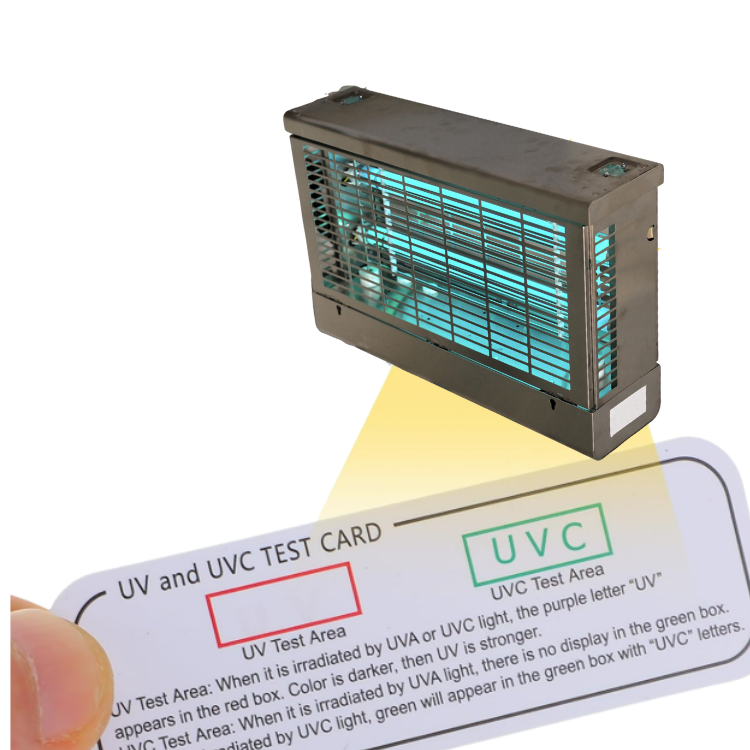
The following workflow is a practical screening procedure, not a laboratory test or certification method.
Record the film brand, model, installation date, warranty, and glazing type.
Also distinguish between vertical walls and roof panels. A specification or warranty for vertical glazing may not apply to sloped installations.
Ask the supplier for:
- Intended use and activating wavelength range.
- Recommended exposure and reading times.
- Temperature-related limitations.
- Storage requirements.
- Reuse guidance and expected service life.
- Available response or batch-consistency documentation.
Do not substitute a UVC disinfection indicator for a solar UV screening card.
Following the supplier's instructions, check the card under suitable outdoor daylight before interpreting an indoor result.
An inactive outdoor control could indicate inadequate exposure, an unsuitable test condition, or an unreliable card. It makes the indoor comparison inconclusive.
Compare the outdoor response with the response behind the selected pane during stable conditions.
Keep orientation, exposure duration, and reading method as consistent as practical. Avoid comparing a cloudy outdoor reading with an indoor reading taken later in strong sunshine.
Use matched cards or allow full recovery between tests, according to the supplier's instructions.
A documented reading taken after installation provides a more useful future reference than memory.
Label individual panes. Record the date, time, weather, approximate temperature, shading, and card identity.
Photographs can support the record, but automatic camera exposure and white balance make them unsuitable as uncalibrated quantitative measurements.
An unexpected result should trigger a controlled repeat, not immediate replacement.
Check the card's condition, shading, exposure procedure, and consistency with previous observations.
If repeat checks show an unexplained difference, contact a qualified installer or testing provider.
Request measurement appropriate to the relevant UV wavelengths and the installed glazing system.
A replacement decision becomes more defensible when physical condition and screening evidence are considered together.
| Observation | Reasonable next step |
|---|---|
| Film looks sound; screening remains consistent | Continue documented monitoring |
| Film looks sound; card response changes unexpectedly | Repeat under controlled conditions |
| Persistent peeling, delamination, or distortion | Request installer assessment |
| Card does not activate outdoors | Investigate the test before judging the film |
| Furniture fades without other changes | Review visible light, materials, and exposure patterns |
| Professional testing confirms unacceptable performance | Discuss replacement against product specifications |
The goal is not to extend film life at all costs. It is to avoid replacing effective film unnecessarily while investigating meaningful problems promptly.
Consider a sunroom with west-facing windows and a glazed roof. The owner notices a stronger afternoon card response near the roof and assumes the entire installation has deteriorated.
That conclusion would be premature.
First, roof glazing and wall glazing may differ. Second, exposure angle and shading may differ. Third, the indicator may respond to wavelengths beyond those covered by the film's stated performance claim.
The sensible response is to identify each glazing system, repeat comparable checks, and inspect installation records before arranging measurement.
This is an illustrative scenario, not a reported customer case. Its lesson is that location-to-location differences are not automatically evidence of ageing.
There is no universal replacement interval for every film and sunroom.
The Skin Cancer Foundation describes window film as typically effective for approximately a decade. However, manufacturer documentation shows that warranty terms can differ substantially between products and installation geometries.
For example, specific 3M documentation lists longer coverage for certain interior applications than for an exterior product used on non-vertical glazing. Those examples demonstrate variation; they do not establish a lifespan for unrelated products.
Use age as a review trigger alongside:
- Product-specific documentation.
- Installation quality.
- Physical condition.
- Exposure and application geometry.
- Appropriate performance assessment.
A warranty period is not an automatic failure date.
For distributors, installers, and glazing brands, a customized UV test card can support product demonstrations and aftercare.
Its value depends on responsible design.
Start by defining what users should learn.
Is the card intended to demonstrate a difference between filtered and unfiltered light? Support repeatable maintenance checks? Explain photochromic technology?
Then establish the required response characteristics and instructions. Branding should follow technical suitability—not replace it.
Useful customization may include:
- Branded layouts and multilingual instructions.
- Clearly identified test areas.
- Batch identification.
- Storage and handling guidance.
- A maintenance-record template.
- A statement explaining qualitative limitations.
Qingdao Focus On Color Industry & Trade Co., Ltd. provides OEM/ODM and personalized customization services. For a window film application, the appropriate starting point is a technical discussion about the intended demonstration, required documentation, and acceptance criteria—not an unsupported promise of measurement accuracy.
Use visual inspection to identify physical problems. Use a suitable UV test card to support screening. Use qualified measurement when the result must support a technical or purchasing decision.
For a customized sunroom window film demonstration program, contact Qingdao Focus On Color Industry & Trade Co., Ltd. with your film specifications, intended users, branding requirements, and target markets. Discuss an OEM/ODM card and instruction format that communicates both the product benefit and the limits of the test.
No. It can support preliminary screening, but replacement requires consideration of physical condition, product specifications, installation history, and, where necessary, professional measurement.
No. It only shows that the indicator did not produce a visible response under those conditions. Its sensitivity, wavelength response, condition, and exposure procedure all matter.
Not necessarily. Color response can depend on exposure conditions and indicator behavior, including saturation. A darker response is not automatically a proportional increase in UV transmission.
No. A UV card does not measure solar heat gain or room insulation. Review the film's relevant thermal specifications and investigate the complete glazing system.
It should be professionally assessed. Physical defects may affect appearance, adhesion, or other required functions, even when a basic card shows no obvious difference.
Not automatically. An installer should determine whether the issue affects individual panes or the broader installation, while considering appearance matching, compatibility, and warranty conditions.
1. International Window Film Association. [Flat Glass–Solar Control Education Manual]. Technical background on UV absorption, glazing performance, solar heat gain, and the multiple causes of fading. [iwfa]
2. The Skin Cancer Foundation. [Seal of Recommendation]. Qualification requirements for UV-protective window film, tint, and glass. [skincancer]
3. The Skin Cancer Foundation. [Ask the Expert: Car Window Tint for UV Protection]. Explanation of clear versus dark film and UV protection. [skincancer]
4. Aguilera, J., et al. (2024). [Qualitative and quantitative analysis of colorimetric photochromic UV indicators]. Research on response, saturation, spectral sensitivity, and practical limitations. [frontiersin]
5. Su, A., et al. (2021). [Quantitative UV-C dose validation with photochromic indicators for informed N95 emergency decontamination]. Methodological context on calibration and uncertainty; not validation of solar UV cards. [pmc.ncbi.nlm.nih]
6. 3M. [Specifications for Sun Control Window Film Prestige Series]. Product-specific optical specifications and warranty provisions. [multimedia.3m]
7. 3M. [Specifications for Exterior Prestige Series]. Product-specific curing guidance and vertical versus non-vertical warranty terms. [multimedia.3m]
8. The Skin Cancer Foundation. [Not All UV Rays Stay Outside: How Window Film Can Help Protect You]. General discussion of film protection and replacement timing. [skincancer]


